Getting your first tailored suit is one of those decisions that pays dividends for years. Whether you’re suiting up for a wedding, a job interview, or simply investing in your professional wardrobe, a well-made suit changes not just how you look — it changes how you carry yourself.
But if you’ve never been through the process before, it can feel a little overwhelming. What type of suit should you get? How long does it take? What actually happens at a consultation? And what should you bring?
This guide walks you through everything — from the three main suit types to what happens step by step at your first fitting appointment in Singapore.
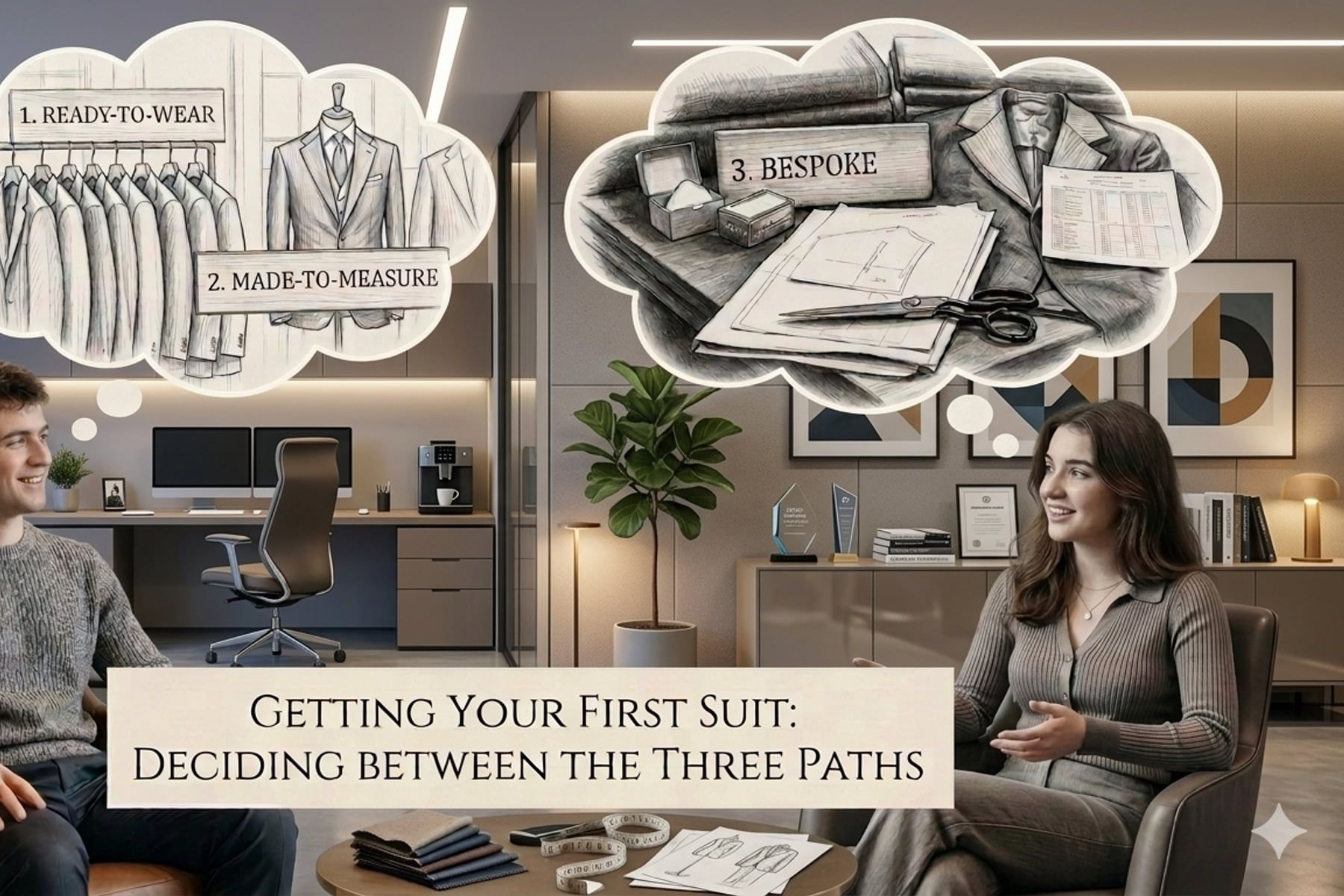
- The Three Types of Suits: Which One Is Right for You? There are three main approaches to getting a suit: ready-to-wear, made-to-measure, and bespoke. Each offers a very different experience in fit, process, and outcome.
1. Ready-to-Wear (Off-the-Rack) Ready-to-wear suits are pre-made in standard sizes and sold as finished garments.
- What to expect: You try on a finished suit in standard sizing (S, M, L, etc. or numbered sizes) Limited or no customization You may need alterations for length or minor fit issues Pros: Fast and convenient (buy and wear immediately) Usually more affordable Easy to try different styles quickly Limitations: Designed for “average” body proportions Shoulder fit is fixed (hard to alter) May require multiple alterations for a decent fit Fabric and design choices are limited Best for: Last-minute events Budget-conscious buyers People with standard body proportions 2. Made-to-Measure (MTM) Made-to-measure suits start with a base pattern that is adjusted to your measurements.
- What to expect: You select a design and fabric Your body measurements are taken A pre-existing pattern is adjusted to fit you Usually 1–2 fittings Pros: Better fit than ready-to-wear More fabric and style options Faster than full bespoke Good balance of price and customization Limitations: Still based on a template pattern Limited structural changes (shoulders, posture corrections) Fit improvements depend on brand/tailor quality Best for: First-time suit buyers wanting a better fit Business suits and regular formal wear People who want customization without long timelines 3. Bespoke Tailoring Bespoke tailoring is the highest level of suit-making The suit is created entirely from scratch based on your body and posture.
- What to expect: In-depth consultation about style and purpose Full body measurements, including posture analysis A unique pattern drafted specifically for you Multiple fittings (usually 2 or more depending on tailor) Progressive refinements until final balance is achieved Pros: Best possible fit and comfort Full control over design details Corrects posture asymmetry and body nuances High level of craftsmanship and finish Limitations: Longer lead time (weeks, not days) Higher investment Requires patience through multiple fittings Best for: Weddings and important life events Clients who value craftsmanship and fit Long-term wardrobe investment pieces
What Actually Happens at Your First Suit Consultation with a tailor in Singapore If it’s your first time, knowing what to expect at the consultation removes a lot of the mystery.
Step 1 — The conversation comes first. A good tailor will spend time understanding why you need the suit before they pick up a measuring tape. Where are you wearing it? What’s the dress code? Do you sit at a desk all day or are you on your feet? This shapes everything from the cut to the fabric choice.
Step 2 — Fabric selection. You’ll be shown swatches from the tailor’s fabric collection. For Singapore’s climate, breathable options like wool-linen blends, lightweight wool, or tropical worsteds are worth considering — they drape beautifully and won’t leave you drenched at an outdoor solemnisation. For a first suit, a mid-grey or navy in a versatile weight is a safe, high-utility choice.
Step 3 — Design decisions. Lapel width, single or double breasted, two-piece or three-piece, notch or peak lapels, button choice, lining — these are discussed here. A good tailor will guide you based on your body type and occasion, rather than leaving you to decide alone.
Step 4 — Measurements. A full set of body measurements is taken, including posture checks. This is more detailed than it sounds — a good tailor will note things like which shoulder sits higher, whether you have a forward head posture, or a fuller right arm.
Step 5 — Fittings. For bespoke, expect at least two fittings. The first ( or muslin fitting) is in a rough suit so the tailor can check the structural fit before cutting the final fabric. The second fitting is in the actual cloth (Basted fitting), refined from the first. Some suits may need a third or more based on your body type.
The Bottom Line Your first suit is less about the clothing and more about understanding fit, proportion, and personal style. A well-made suit does more than improve your appearance—it tells a story about attention to detail, personal style, and confidence. While ready-to-wear suits are built for the masses, bespoke tailoring is built for the individual.
Ready-to-wear offers convenience Made-to-measure offers balance Bespoke offers precision and identity The right choice depends on what you value most — and what the occasion demands. If you’re unsure, the best starting point is a conversation with a tailor who will ask the right questions before recommending anything.
Book a no-obligation consultation with Perfect Attire →
.
About the Author Tulsi Kamath is a menswear consultant at Perfect Attire , specializing in bespoke suits, wedding tailoring, and custom menswear in Singapore. With years of experience helping clients achieve the perfect fit, she shares insights on tailoring, style, and craftsmanship to help men make informed wardrobe decisions.